

An Interview with Miranda Baksh, the new Education Programs Manager at the Greenpeace Canada Education Fund.
Miranda will be the driving force behind our ambitious Greenspeakers Grow program, and her impressive range of experience makes her uniquely qualified!
Her passion for education took root during seven years as an outdoor environmental educator and continues today through guest lecturing and public speaking. She’s worked with Environmental Defence, Climate Action Network, Toronto and Region Conservation Authority, Ontario Nature and more. She is also a founder of the Community Climate Council, a non-profit that promotes climate literacy and civic action in the Greater Toronto Area.
In this conversation, Miranda shares what drew her to environmentalism, how education can transform climate anxiety into action, and how she plans to grow the Greenspeakers program. She’s interviewed by Jackie Gallagher, Director of the Greenpeace Canada Education Fund.
Jackie: Can you remember the moment when environmental issues first became personal to you?
Miranda: I feel lucky to have grown up deeply connected to nature as a toddler, whether I was dancing around a campfire at the cottage, gardening with family, or watching National Geographic Kids. Hearing my parents’ stories about nature in Guyana, where they grew up, started my fascination with biodiversity and my need to protect it.
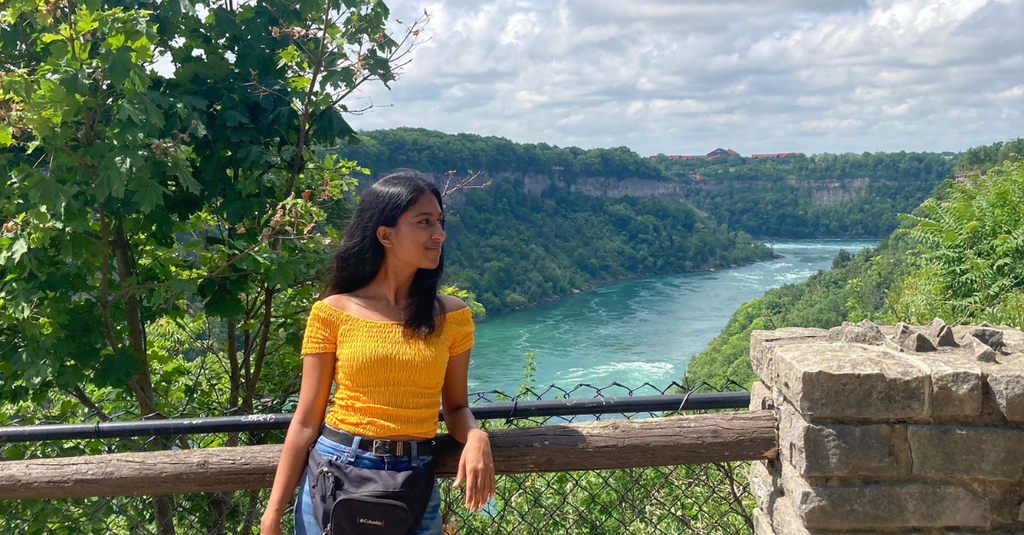
Later, in high school, I recall feeling a strong sense of injustice when the BP oil spill happened. I remember watching the news, thinking about all the wildlife being impacted by the clouds of oil being pumped into the ocean. Honestly, I cried. I wanted to help, but we were watching on our screens, helpless.
Around the same time, I took an environmental science course, where I learned that environmentalism isn’t just about the nature outside. I raised awareness in my school on how sodium lauryl sulfates, which are found in our shampoos, can cause cataracts and other health issues. I realized how many issues were interconnected and called “environmentalism.”
Jackie: What drew you to your new role with the Greenpeace Canada Education Fund?
Miranda: I’ve been exposed to what types of powers are at play when it comes to controlling the climate change narrative or preventing climate action. For example, I’ve learned that the oil and gas industry has shaped school board curricula in Canada, which blew my mind. It’s more important now than ever before, especially in the era of disinformation and AI, to make sure that young people are getting quality education about the environment and real climate action.
Jackie: That counter voice is something you’ll be amplifying as you manage the expansion of the Greenspeakers program. How would you describe that program to someone hearing about it for the first time?
Miranda: Over several years, it’s been 100% volunteer-led, which is incredible considering the volunteers have inspired thousands of students. Volunteers are trained on several topics, and they’re invited to classrooms, where they teach kids about environmental issues and solutions that protect the planet now and for future generations. They may also teach in auditoriums or have big gymnasium workshops.
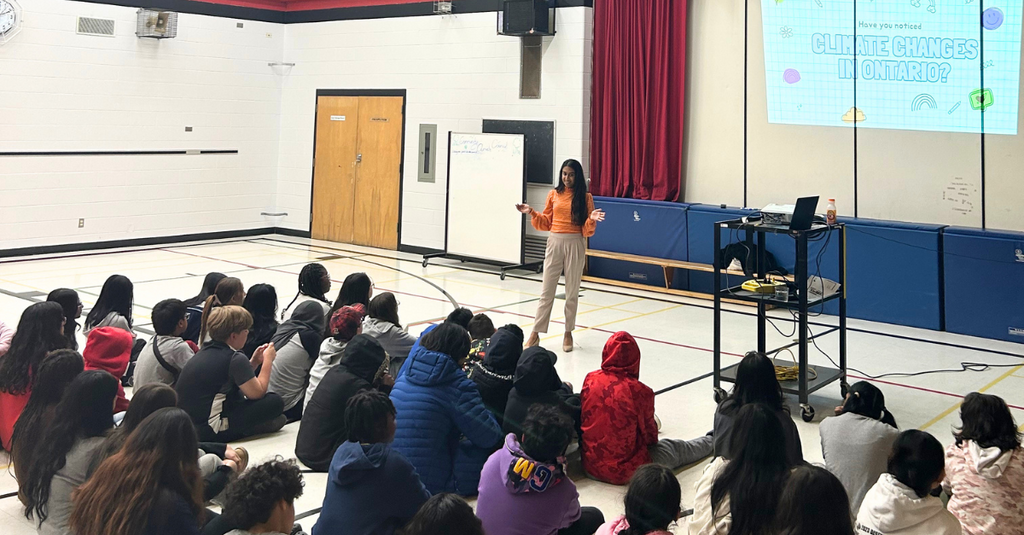
Jackie: The volunteers really are incredible. They’ve reached more than 17,000 students in over 300 schools since 2016! You’ll be building on that program’s success as you lead the implementation of Greenspeakers Grow, a response to a gap in climate education across Canada. What do you think teachers and students are missing right now when it comes to climate education?
Miranda: Teachers are missing tangible supports for bringing climate action or environmentalism into their classrooms. I’m hoping that we can offer online tools or resources that make it easier for them. For instance, how can you do birding at recess? How do you host a climate cafe in your classroom?
I’m also hoping to start newsletters for teachers and parents, with environmental craft ideas or tips and tricks on talking to your kids about climate change.
Aside from that, expanding Greenspeakers nationally is an exciting opportunity because our core team is primarily based in Ontario right now. I’m also excited to get more involved with the francophone community because we do get quite a few requests in Quebec, and there is a lot of interest in the west coast of Canada, as well.
Jackie: We know that many young people are feeling overwhelmed and anxious about climate change. How do programs like Greenspeakers help move them from anxiety to action?
Miranda: We give them hope, for example, by providing real, living examples of people taking action for the planet, who can share success stories of how caring does matter. Having diverse voices in the classroom, all excited about the environment, really ignites hope and passion.
Even though students may not be of voting age, there’s so much they can do—raising awareness within their circle of family and friends, creating art, and learning about the land they live on or near and how to take care of it.
Knowledge is power. Once students are equipped with the knowledge to recognize what is happening and confidently steer clear of disinformation, it can transform their lives, empowering them to take meaningful actions for the planet.
Jackie: When volunteers participate in Greenspeakers, what do you hope they take away with them?
Miranda: We are always looking for more volunteers. Whether they are high school students fulfilling volunteer hours or people wanting to gain experience in education or environmentalism, this is a great opportunity.
Something I’m recognizing is that all the volunteers are incredibly wonderful people. I think if you care about the environment, you already have empathy for the natural world and for people. The volunteers are coming in with that concern.
Part of building this volunteer base is showing each other that we’re not alone in this. It’s so empowering for volunteers to see others who want to make a difference. There’s solidarity and, honestly, just having fun, too. Volunteers can inspire others and be inspired by their peers and students alike.
Jackie: That’s a beautiful way to put it. Thank you so much for your time today, Miranda. I’m excited to support you and see what you and the volunteers bring to life in the months ahead.

Discussion
What a wonderful idea. This interview was full of worthwhile information. I also believe that the information has to be shared with the young people and then perhaps they get get their parents and even grandparents involved.